Eating Disorders Are Dangerous: A Dietitian’s Honest Reflection
Ok guys, real talk here…
Eating disorders suck.
No, but like, for real.
I’ve been doing this work for almost 17 years now, and in that time, I’ve seen a lot. In my first few years as a dietitian, I thought I understood how serious eating disorders were. I’d seen people with esophageal cancer from purging or rumination. I’d seen clients with brittle and broken bones, erratic blood sugars, or electrolyte imbalances so severe they landed in the hospital. I’d sat with people fighting for their life after a stroke or heart attack or suicide attempt. I’ve seen a lot.
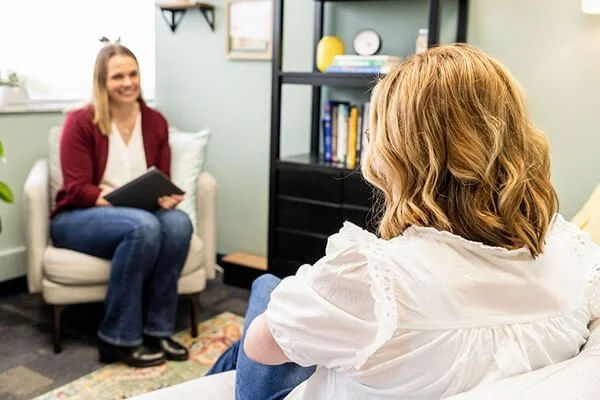
So yes, I knew eating disorders were dangerous. I knew it. I saw it. I believed it.
Back then, when I met someone early in their illness, I’d sometimes remind them, this could happen to you. I’d say, “This is serious. This is dangerous.” And I meant it. But if I’m honest, some part of me still wondered; could that really happen to this person sitting in front of me? They seemed too strong, too young, too vibrant, too alive for those consequences to ever be real.
But now… ugh, I hate this part.
The truth is, I’ve been doing this long enough that those “this could happen” warnings have become “it is happening.” In some cases, with the very same people I saw over a decade ago.
And it breaks my heart every single time.
The Long Game No One Talks About
Eating disorders are relentless. They take and take and take; your strength, your energy, your peace, your joy. And if left untreated or under-treated, they take far more than that.
At this point in my career, I’ve walked with many clients for years, some who’ve fought hard and rebuilt their lives, and others whose bodies simply can’t handle any more abuse, and many in between those two places. I’ve seen what long-term malnutrition can do to a person’s bones, organs, and heart. I’ve seen clients who are way too young to be experiencing the medical issues they are navigating.
It’s not a shock anymore. But it still hurts every single time.
Eating disorders aren’t picky about who they hurt. They don’t care how educated you are, how much therapy you’ve had, how badly you want to get better, or how much you love your family. They just take.
And the worst part? They take from the people who deserve it least, the ones who are often kind, conscientious, hardworking, and deeply caring. The people who give to everyone else until there’s nothing left for themselves.
What I Wish I’d Understood Back Then
Sometimes, I think back to those early years and ache at what I didn’t yet KNOW in my bones. I wish I could go back and help more, or somehow say it in a way that would make the illness lose its power. But I also know: that’s not how eating disorders work.
They’re not just a “choice” or a “phase.” They’re an illness that digs deep into the wiring of the brain, body, and identity. They thrive in silence and shame. And they are, without question, among the deadliest mental illnesses we know.
I wish we all, as a field, as a culture, believed people sooner. Believed that eating disorders aren’t about vanity or willpower, but about survival mechanisms gone wrong. That they are serious, complex, and sometimes fatal illnesses that deserve the same urgency and compassion as any other life-threatening disease.
The Grief That Comes With Caring
Here’s the part most people don’t talk about: this work can be heartbreaking.
When you’ve sat with someone for years, through refeeding, relapse, hope, despair and everything in between, and then watch their body begin to fail them… it’s devastating. It’s not an “I told you so.” It’s a deep, aching “I wish you didn’t have to endure this.”
There’s grief for what the eating disorder has taken, and grief for what the person has lost: years, memories, energy, freedom. And for those of us who do this work, there’s grief for what we couldn’t save, even when we gave everything we had.
It’s heavy. And sometimes it’s easy to forget that it’s supposed to be heavy, because that’s how much we care.
And Yet… Hope
For all the heartbreak, there’s also this: I’ve seen people heal. I’ve seen bodies once too weak to move regain strength. I’ve seen people laugh again after years of fear. I’ve watched nourishment rebuild trust where shame once lived.
Recovery isn’t linear. It’s messy, slow, and sometimes brutally unfair. But it’s possible.
And every time I see even one small spark, one meal eaten without fear, one boundary set, one moment of softness toward a body that’s been hated for too long, I’m reminded why I still allow myself to truly care and invest so much in this work.
The longer I do this, the more I understand that hope isn’t naïve. It’s necessary.
If You’re Struggling
If you’re reading this and you’re still in the thick of it; maybe fighting the same battle year after year, maybe tired of starting over…please know this: you are not beyond help, and you are not alone.
Your body deserves more time. Your story deserves more chapters.
I know this illness can make you believe that healing is for other people, not for you. But I’ve seen enough to know that’s not true.
So yeah, real talk: eating disorders suck. They take things no one should ever have to lose.
But healing, even slow, imperfect, stubborn healing, gives some of it back.
And that’s worth everything.

Rebecca Adams RD, LD, CEDS-C is a Registered Dietitian specializing in Eating Disorders and the Owner of Balanced Nutrition Therapy. She has over 15 years’ experience working with all types of Eating Disorders from residential to outpatient settings. Rebecca’s thoughtful, compassionate, and science-backed approach has helped hundreds of people heal their relationship with food.