When Family Makes Eating Disorder Recovery Harder (And What to Do About It)
Eating Disorder recovery is hard enough on its own. But trying to heal inside a home environment that keeps pulling you backward? That's a different level of hard. And if you're in that situation right now, I want you to know: it makes complete sense that you're exhausted.
This isn't a sign that you're doing recovery wrong. It's a sign that you're doing something really hard without the support you deserve.
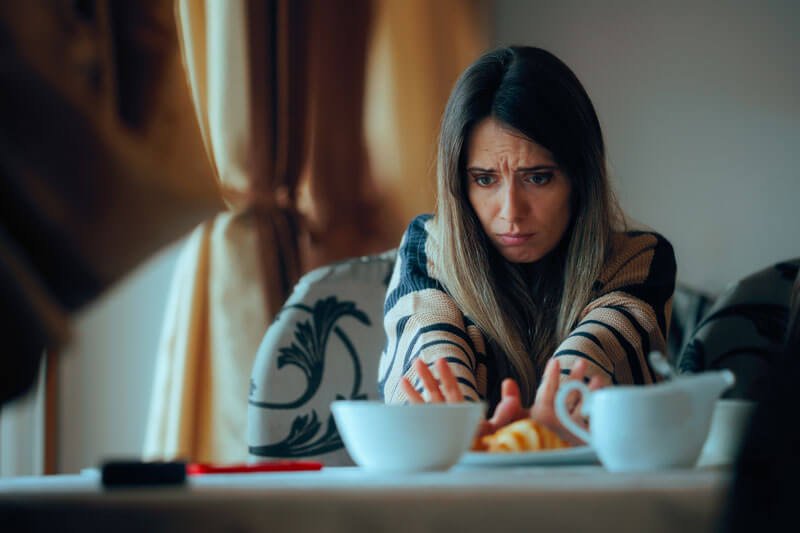
How Well-Meaning Family Comments Fuel Eating Disorder Thoughts in Recovery
Here's what most families don't realize: their words don't land the way they were intended. They get intercepted first.
Your eating disorder is listening to everything.
So when someone says "you look great!" they mean it as love. But what your eating disorder hears is an entirely different conversation. Great, so now I'm fat. My team says I still need more, but they're saying I look fine. I knew I'd been gaining weight. A single comment can spiral in three different directions before the other person has even finished their sentence.
And it's not just body comments. "I haven't seen you eat that much in a long time!" feels celebratory to them. To you, in early recovery, it can feel like surveillance. Like confirmation that people are watching and counting.
Their words are coming from love. Your eating disorder is just a very loud translator.
What Helpful Actually Looks Like
The most helpful and least triggering recovery comments have nothing to do with food or bodies.
"I've noticed you've been smiling more today. I love seeing that."
"Dinner conversation was so good tonight."
"You seem stressed. Is there anything I can help with?"
That's it. Connection without commentary. Presence without a scorecard. Families who learn to do that become genuinely helpful. But getting there often requires education, and sometimes, even with education, it doesn't happen. Not because they don't love you. But because this is hard for them too, and people can only meet you as far as they've met themselves.
(Our post on navigating mealtime stress goes deeper on this!)
How to Protect Your Eating Disorder Recovery in an Unsupportive Home Environment
This is the part nobody loves to hear, but here it is: you can't control what other people say. You can control whether you stay in the room for it.
Protecting your recovery in an unsupportive environment looks like a few things in practice. It means learning your audience. Some people in your life aren't a good well to draw from when it comes to recovery support. That doesn't make them bad people. It means you stop going to that well for that specific water. You might find that the same person who says the wrong thing at dinner is actually wonderful to call when you're anxious about something unrelated.
It also means building your support elsewhere. Friends, extended family, your treatment team. The people who do get it, even imperfectly.
And sometimes, it means walking away from a conversation mid-sentence. Not dramatically. Just quietly. This isn't helpful for me right now. That's a complete sentence.
Grieving the Support You Wish You Had
Here's the part I really want you to hear.
It is okay to grieve the fact that the people you love cannot support you the way you need right now. That grief is real. It’s not you being dramatic. It’s one of the harder parts of this whole process, and it doesn't get talked about enough.
Their limitations are not yours to fix. Their unresolved stuff with food, with bodies, with discomfort is theirs to work on. Your job is to work on your own healing. Full stop.
Eating Disorder Recovery Is Still Possible, Even Without the Perfect Support System
It's not fair that your recovery has to happen in an environment that makes it harder. I'm not going to pretend otherwise.
But you are still in control of more than it might feel like right now. You can set limits. You can build support. You can grieve and still move forward. You don't need everyone around you to be perfect for your recovery to be possible.
You just need enough. And we can help you figure out what that looks like.
If you're navigating recovery in a complicated family environment and could use support, we're here. Reach out to the BNT team to get started.

Rebecca Adams RD, LD, CEDS-C is a Registered Dietitian specializing in Eating Disorders and the Owner of Balanced Nutrition Therapy. She has over 15 years' experience working with all types of Eating Disorders from residential to outpatient settings. Rebecca's thoughtful, compassionate, and science-backed approach has helped hundreds of people heal their relationship with food.
You might also enjoy reading: